Maybe this is my privilege speaking (which is entirely possible), but I don't really understand why people are upset about the influx of suburban white women that have come forward in the past week to stand up against our cheeto-colored President and his cabinet of fruit loops.
Does it suck that these white women weren't there to support women of color when unarmed young black men were (and still are) shot and killed by law enforcement? Of course. Is it horrible that they weren't standing up for their Muslim brothers and sisters when the idea of a Muslim registry was brought up? Definitely. Is it incomprehensible that these women never seemed to speak up when a white man running for President called Mexican immigrants rapists and murderers? Absolutely.
My question is this: how do we move forward?
I don't see anything wrong with pointing out that the middle class suburban white women of America are awfully late to the party, but shouldn't we embrace the fact that they showed up to the party at all? I mean, yes, minority women have been talking until we are blue in the face about the current system and its inequalities, but better late than never, right?
I understand, intellectually, that there is a lot of pain and a lot of bitterness among women of color because these privileged women had the luxury of coming late to the party and ended up getting more recognition for it than the years that minority women have put into this fight. It hurts when someone that you feel should support you stays silent. It hurts when they don't speak up in your defense or when they turn a blind eye to what's happening in front of them. It hurts to realize that someone who said they love and support you in private is unwilling to say those same words in public. It hurts and white women need to understand that they have hurt their minority sisters with their silence and inaction, but is getting mad at them once they realize that they made a mistake the way to build bridges and mend the relationship?
Frankly, the burden of speaking up for civil rights has always been something that has fallen most heavily on people of color and minorities. It's awful and it shouldn't be that way, but it is. Maybe that will change one day. Hopefully that will change one day. Unfortunately, that day isn't today.
We know that today isn't that day because that day should have been yesterday and the day before that and the day before that. Women of all backgrounds should have stood in solidarity from the very beginning of this mess, but they didn't.
Okay, so maybe I do understand why women of color have been so upset about the recent addition of support from white women. However, there's more to it than that.
I'm the oldest child in my family and I'll be the first to tell you that one of my least favorite phrases to hear emerge from my parents' mouths when I was little was, "Be the bigger person." I used to think, "Or maybe my little brother could just stop being a stupid person and then I wouldn't need to be the bigger person." After all, if he hadn't been annoying to begin with, I wouldn't have to make up for his immaturity, right? Well, yes, but that wasn't going to change things. The reality is that he had done something to annoy me and I either had to move forward or sit and be angry forever. The irony of the second option is that by holding onto my annoyance or anger, I would have been doing the same thing that my brother did: acting immature and petty.
Honestly, I still hate being told that I need to be the bigger person. I really, really do. Even as an adult my first thought is that I shouldn't have to be the bigger person, they should have to pay better attention and be more aware. Unfortunately, as true as that may be, it still doesn't change what has happened. I can either acknowledge it and use it as a tool for education or I can focus on the pain that it caused and try to get back at whoever caused it by lashing out so that they feel hurt the same way that I do. Only one of these options is constructive.
This doesn't mean that we have to ignore that white women didn't show up until well after kickoff (forgive me for using so many analogies and metaphors). In fact, I think that they absolutely need to be told by women of color that they are kinda crappy teammates. After all, it's pretty selfish, not to mention incredibly unfair, to let your team start with a man down and expect them to keep the game close until you get there. To take this even further, if you show up late and your teammates have been playing an uneven game, you shouldn't be surprised if they are upset at you. In fact, you should expect it. You should also expect that when you get there, they will already be tired from having to make up for your absence. You win or lose as a team and you've just put your team at a distinct disadvantage just by not being on time.
But in order to win, you need to play as a team. When the final whistle blows, it doesn't matter who showed up when. The only thing that matters is the final score. That's the objective, right? We need to make sure that we win. Period.
So be mad at the latecomers. Give them grief for slacking and not paying attention. Then get back to the business of winning because this is not something that we can afford to lose. This is the World Cup, the Championship, End Game. It's fine to be angry and upset, just don't lose sight of the goal. After all, this is a game that we cannot afford to lose because if we lose, everyone loses.
Wednesday, January 25, 2017

Wednesday, December 28, 2016
Fear Itself
Hey, America. Why are we so scared?
No, really. Fear makes us stupid. When we are fearful, psychologists have shown that we are significantly more likely to cling to what we know rather than explore new options. Fear causes us to hunker down and bury our heads in the sand. We become paralyzed and, by extension, stop looking for ways to improve or resolve things and instead look for ways to survive things.
Medical experts say that the anxious feeling we get when we're afraid is a standardized biological reaction, but that doesn’t explain why we are afraid in the first place. Psychology has identified five major categories that most human fear seems to fall into:
Extinction - Because, let’s be real for a moment, what is more terrifying than ceasing to exist?
Mutilation - This refers to more than something as straightforward as dismemberment. This can manifest itself in a fear of getting bitten by a bug or animal, scraping your face and getting a scar, even the natural appearance of wrinkles as you age falls into the category of “fear of mutilation”.
Loss of Autonomy - This is a fear of losing power. This loss can be physical (think of kidnapping, assault, or imprisonment) or it can be less tangible (think more along the lines of being in a situation where everything is outside of your control or, for a more concrete example, being held responsible for something that you didn’t actually do).
Separation - Somewhat akin to extinction, this fear is rooted in not mattering. It’s one of the reasons why the silent treatment often works. It’s where the idea of FOMO comes from (the fear of missing out). This fear is founded on the idea that we might not actually matter, ever, to anyone.
Ego-Death - This one is both simple and complicated. On one hand, it’s pretty easy to understand that no one likes being humiliated or shamed. However, it’s deeper than that. Ego-death is the fear that your entire understanding of who you are will be destroyed. The idea that we might reach a point where we don’t even know who we are anymore is terrifying to most people.Think of this example: someone thinks that their heritage is from Scotland, Iceland, and Germany without any other influences. They run DNA tests, convinced that this will prove that they have a pure lineage only to discover that somewhere in their family tree they have both Native American and African ancestry. This completely changes the way they view the world and their place in it.
When you think of some of the more common phobias, these categories are pretty much going to cover them all: afraid of public speaking? That’s probably a combination of ego-death and possibly a long-term consequence of separation. Fear of clowns? Generally this fear is rooted in extinction (killer clowns), mutilation (violent clowns), or loss of autonomy (kidnapper clowns). What about fear of commitment? Generally that is related to a fear of losing one's autonomy because you worry about not being in control of your life any more.
So why is this important?
Polls show majorities of Americans across demographics are worried about being victims of terrorism and crime. These numbers have surged recently to highs we haven’t seen for more than a decade in the US. The results? Policies like this and this.
Thanks to our fear, we imprison over a hundred thousand people with no more justification than “they look like the Bad Guys.” We question the loyalty of our own citizens. We deny the facts. Even worse, we flat-out make things up.
The basic trick here is to make a clear connection between what you are proposing and a specific outcome. Often this looks like a solution to something dangerous, or, more commonly, highlighting the dangers of not doing something.
It’s time that we take a long, hard look at ourselves.
According to Chapman University’s annual Survey of American Fears, people in America are most afraid of corrupt government officials, terrorist attacks/terrorism, not having enough money for the future, and government restrictions on firearms and ammunition. However, we need to look at whether or not these fears are founded in truth or if it’s potentially a result of fake news and other lies.
The US Department of State has explicitly reported that, “The total number of terrorist attacks in 2015 decreased by 13% and total deaths due to terrorist attacks decreased by 14%, compared to 2014. This was largely due to fewer attacks and deaths in Iraq, Pakistan, and Nigeria. This represents the first decline in total terrorist attacks and deaths worldwide since 2012.” Yet, Americans are more afraid than ever before about terrorist attacks?
Why are we afraid of immigration when data suggests that native-born Americans are more likely to commit crimes than immigrants? Why are we afraid that the government will take away our guns when the government hasn’t done anything to even revise the Firearms Owners’ Protection Act since 1986?
What are we afraid of?
The 32nd President of the United States, Franklin D. Roosevelt, is famous for having said, “The only thing we have to fear...is fear itself.” Well, maybe that’s our problem. We’re scared because we’re scared. We’re scared because it’s easier to be scared than to seek out the truth. We’re scared because it’s better than finding out that we were wrong. We’re scared because it gives us an excuse to do and say outrageous things without consequence. We’re scared because we don’t want to behave like responsible adults.
Come on. We’re better than this.
Monday, June 13, 2016
On Gun Rights and Regulation
I've been trying to wrap my head around the latest in a long, long, long line of mass shootings in the United States. It's unfathomable to me that someone would be so full of rage and hate that they would go out and kill 50 strangers. I don't know much about the shooter and I know even less about the victims other than the community that they are associated with. However, there is something I do know: public discourse in the United States needs to change.
We have to do something about gun regulation. We don't need to take away people's guns. We need to make sure that all gun owners are responsible. Frankly, I don't know why more gun owners aren't speaking out about how there needs to be stronger restrictions regarding who can own a firearm. After all, the more mass shootings that we have in this country without outcry from gun owners, the crazier said gun owners seem. By saying ridiculous things like, "Not all gun owners," we are allowing people to excuse the behavior of a fringe group of gun owners without doing anything to prevent more of them from getting their hands on weapons.
Seriously, if you are a responsible gun owner, why would you protest having a three-to-five day waiting period before you get to pick up a gun? After all, if you are a responsible gun owner, that won't affect you other than a short delay while you wait for verification. Why wouldn't you want more background checks and verifications? Why wouldn't you want the kinds of weapons available like the semi- and fully-automatic weapons that are so popular among mass shooters to require verification and certification and registration? How is requiring to register your weapons in any way infringing on your rights? How is registering your guns any different than registering a vehicle?
Like many of you, I have heard arguments from people that believe that it's a God-given right to own a firearm. However, in light of all of this tragedy, I can't help but wonder how these gun rights supporters can continue believing that the assumed rights of one person outweighs the importance of public safety.
"The only way to stop a bad guy with a gun is a good guy with a gun."
How can people keep saying this? How about we change it to, "The only way to stop a bad guy with a gun is to take away the gun"?
Columbine High School had an armed deputy sheriff and 13 people were still killed. Virginia Tech had an entire police force, including a SWAT team, when 32 people were killed in two separate attacks by the same person. At the Tucson shooting where US Representative Gabrielle Giffords was shot and 6 others were killed, not only was there an armed civilian present who failed to stop the shooter, but he almost shot one of the unarmed people who tackled and disarmed the shooter. The Fort Hood massacre that left another 13 people dead occurred on a military base filled with soldiers. Heck, even the Secret Service couldn't protect President Reagan and his press secretary Jim Brady when both were shot in an assassination attempt.
This has gotten completely out of hand.
"An armed society is a polite society."
According to the FBI crime report from 2013, there are only five states where less than 50% of murders were committed with a firearm. In case you're curious, the states are Iowa, Alaska (most gun-related deaths in Alaska are suicides), New Hampshire, North Dakota, and South Dakota. That means that in the remaining 45 states, more than 50% of murders involved a firearm.
If we are to believe that the better armed we are as a society, the fewer deaths we are going to see, there seems to be clear evidence to the contrary. According to the Institute for Economics and Peace, the three most peaceful states in the union are Maine, Vermont, and Utah. In Maine, 50% of murders involved a firearm. In Vermont, 56% of murders involved a firearm. In Utah, 63% of murders involved a firearm.
How could someone possibly believe that we don't have a gun problem in this country?
The United States owns more than half of the world's civilian guns. We have the highest firearms murder rate per capita in the world. In fact, we are 20 times more likely to be killed by a gun in the United States than someone that lives in another developed country.
The way we talk about and regulate guns in this country is completely absurd. It's wrong. It's harmful. It's dangerous. It's more than time for us to stop the ridiculous arguments supporting gun ownership and start looking at the importance of public safety.
I remember back in 2011, people would say things like, "You can't stop doing X or else the terrorists win." Well, what if the terrorists are my fellow Americans? I went to a movie the other day and thought, "At least I don't have to worry about getting shot here since the theatre is pretty empty. There are other theatres here that have more people right now that a shooter would probably hit before this one." Do you realize that this means that somewhere in the back of my head I was thinking, "I'm going to the movies. I might get shot," and I had to use a flimsy mental reassurance that I probably wasn't going to get shot since I was seeing a less popular movie than other people?
That is so screwed up.
I'm very lucky to have season tickets to multiple sports in my city, but when I go to sporting events I automatically look for multiple exit routes from my seat as well as any places that I might be able to utilize for cover or concealment in case something happens. It's become part of my day. It's now routine. This has become something that sits in the back of my mind whenever I'm out in public because I don't know who around me is crazy and carrying.
Maybe it would be easier if I didn't feel like I have so much to live for. If anything were to happen to me, my family would be crushed. I have close friends that would have a gaping hole in their lives. I have a job that I am good at. I have dreams that I still want to achieve. All of that could be gone in an instant. Taken by a stranger that knows nothing about me, my friends, my family, or my life.
I've never been in a situation where I have had to fear for my life other than one time in college when there was a murder-suicide on campus. I was an RA in the dorm closest to the building where it happened and it was less than two weeks after the Virginia Tech shooting. Although the police quickly determined that there was no further danger to the campus community, it was still a terrifying experience.
Is this the new normal? Is this the way that we want to live? Is this the way that we want the rest of the world to view us? Are we really satisfied with our own citizens being afraid for their lives because we are unwilling to better regulate weapons?
This is unacceptable. This must change. We are better than this. It's time to prove it.
We have to do something about gun regulation. We don't need to take away people's guns. We need to make sure that all gun owners are responsible. Frankly, I don't know why more gun owners aren't speaking out about how there needs to be stronger restrictions regarding who can own a firearm. After all, the more mass shootings that we have in this country without outcry from gun owners, the crazier said gun owners seem. By saying ridiculous things like, "Not all gun owners," we are allowing people to excuse the behavior of a fringe group of gun owners without doing anything to prevent more of them from getting their hands on weapons.
Seriously, if you are a responsible gun owner, why would you protest having a three-to-five day waiting period before you get to pick up a gun? After all, if you are a responsible gun owner, that won't affect you other than a short delay while you wait for verification. Why wouldn't you want more background checks and verifications? Why wouldn't you want the kinds of weapons available like the semi- and fully-automatic weapons that are so popular among mass shooters to require verification and certification and registration? How is requiring to register your weapons in any way infringing on your rights? How is registering your guns any different than registering a vehicle?
Like many of you, I have heard arguments from people that believe that it's a God-given right to own a firearm. However, in light of all of this tragedy, I can't help but wonder how these gun rights supporters can continue believing that the assumed rights of one person outweighs the importance of public safety.
"The only way to stop a bad guy with a gun is a good guy with a gun."
How can people keep saying this? How about we change it to, "The only way to stop a bad guy with a gun is to take away the gun"?
Columbine High School had an armed deputy sheriff and 13 people were still killed. Virginia Tech had an entire police force, including a SWAT team, when 32 people were killed in two separate attacks by the same person. At the Tucson shooting where US Representative Gabrielle Giffords was shot and 6 others were killed, not only was there an armed civilian present who failed to stop the shooter, but he almost shot one of the unarmed people who tackled and disarmed the shooter. The Fort Hood massacre that left another 13 people dead occurred on a military base filled with soldiers. Heck, even the Secret Service couldn't protect President Reagan and his press secretary Jim Brady when both were shot in an assassination attempt.
This has gotten completely out of hand.
"An armed society is a polite society."
According to the FBI crime report from 2013, there are only five states where less than 50% of murders were committed with a firearm. In case you're curious, the states are Iowa, Alaska (most gun-related deaths in Alaska are suicides), New Hampshire, North Dakota, and South Dakota. That means that in the remaining 45 states, more than 50% of murders involved a firearm.
If we are to believe that the better armed we are as a society, the fewer deaths we are going to see, there seems to be clear evidence to the contrary. According to the Institute for Economics and Peace, the three most peaceful states in the union are Maine, Vermont, and Utah. In Maine, 50% of murders involved a firearm. In Vermont, 56% of murders involved a firearm. In Utah, 63% of murders involved a firearm.
How could someone possibly believe that we don't have a gun problem in this country?
The United States owns more than half of the world's civilian guns. We have the highest firearms murder rate per capita in the world. In fact, we are 20 times more likely to be killed by a gun in the United States than someone that lives in another developed country.
The way we talk about and regulate guns in this country is completely absurd. It's wrong. It's harmful. It's dangerous. It's more than time for us to stop the ridiculous arguments supporting gun ownership and start looking at the importance of public safety.
I remember back in 2011, people would say things like, "You can't stop doing X or else the terrorists win." Well, what if the terrorists are my fellow Americans? I went to a movie the other day and thought, "At least I don't have to worry about getting shot here since the theatre is pretty empty. There are other theatres here that have more people right now that a shooter would probably hit before this one." Do you realize that this means that somewhere in the back of my head I was thinking, "I'm going to the movies. I might get shot," and I had to use a flimsy mental reassurance that I probably wasn't going to get shot since I was seeing a less popular movie than other people?
That is so screwed up.
I'm very lucky to have season tickets to multiple sports in my city, but when I go to sporting events I automatically look for multiple exit routes from my seat as well as any places that I might be able to utilize for cover or concealment in case something happens. It's become part of my day. It's now routine. This has become something that sits in the back of my mind whenever I'm out in public because I don't know who around me is crazy and carrying.
Maybe it would be easier if I didn't feel like I have so much to live for. If anything were to happen to me, my family would be crushed. I have close friends that would have a gaping hole in their lives. I have a job that I am good at. I have dreams that I still want to achieve. All of that could be gone in an instant. Taken by a stranger that knows nothing about me, my friends, my family, or my life.
I've never been in a situation where I have had to fear for my life other than one time in college when there was a murder-suicide on campus. I was an RA in the dorm closest to the building where it happened and it was less than two weeks after the Virginia Tech shooting. Although the police quickly determined that there was no further danger to the campus community, it was still a terrifying experience.
Is this the new normal? Is this the way that we want to live? Is this the way that we want the rest of the world to view us? Are we really satisfied with our own citizens being afraid for their lives because we are unwilling to better regulate weapons?
This is unacceptable. This must change. We are better than this. It's time to prove it.
Saturday, May 30, 2015
Anxiety is No Joke
Panic attacks aren’t funny. In fact, panic attacks can be downright terrifying. Seriously, if you’ve never had one, it’s not like those times when you momentarily freak out about losing your phone for about 30 seconds and then find it wedged between your couch cushions. Panic attacks are Seriously Not Fun.
Imagine this: suddenly you can’t seem to take a full breath, your heart starts pounding in your ears. You wonder, “Am I having a heart attack at the age of 25?” Then your eyes start to slightly blur and your brain starts telling you that you are about 2 seconds away from dying. Now make that feeling last for 5 minutes in real time, but about 2 years inside of your head. You can’t think, you can’t even effectively communicate to someone near you that anything weird is going on. Everyone around you continues to function normally, but you just want to run to the bathroom and throw up. Of course, that’s assuming that you can remember where the bathroom is and how to get there.
That, my friends, is just one variation on a theme. Not all panic attacks are like that, but that’s how mine feel. The worst part is that these panic attacks can be triggered by anything. Seriously, anything. One day I was going for a quick walk outside of my office to stretch my legs. I started thinking about how nice the weather was and how spring was just around the corner. That’s when I saw it: DeathFluff. You know what I’m talking about. Every spring that fluffy cotton stuff invades the air, choking the life out of anyone with even the slightest hint at allergies. As soon as I saw that first speck of DeathFluff, I felt like I couldn’t breathe. I wondered if it was a sudden allergy attack or if something else was happening. Then I started to lose my balance and had to sit on a conveniently located curb. Of course, I almost fell over trying to get down to the ground, but I’m sure I only looked like I was mildly intoxicated rather than dealing with a panic attack.
You see, I had realized that I hadn’t taken the usual amount of antihistamines that morning before work. I had overslept a bit and dashed out of my apartment like a mini whirlwind. Unfortunately, that meant that the teeniest, tiniest bit of DeathFluff caused me to completely lose it. Yes, I have allergies. Bad allergies. Like, bad enough that I am supposed to carry an inhaler around during most of spring and summer so that when it triggers an asthma attack I can manage it without passing out from oxygen deprivation. However, this tiny bit of DeathFluff was absolutely not enough to trigger an allergy attack and, really, I was in no danger of having a massive allergy attack at that moment.
Logically, I knew all of this. Panic attacks, however, do not care about logic. Panic attacks are like little toddlers lurking in your subconscious. “No, honey. You can’t play with the stove because it’s hot and it will burn you.” Cue tiny human outrage and about 20 minutes of screaming and kicking while laying in the middle of the kitchen floor.
Thankfully, I was able to handle it and get back to the office before the end of my lunch break, albeit a little wobbly-kneed and pale.
It bothers me how people that have never dealt with anything like a legitimate panic attack seem to think that they aren’t a “big deal” or that they are as easy to “cure” as just “toughing it out”. Yes, I have actually heard all of these explanations from people.
Anyhow, my point is that if anyone out there tries to say that panic attacks are “nothing” or that you should be able to just “get over” them has no idea what they are talking about. Also, if you are dealing with anxiety disorders or depression or any other kind of mental illness, you aren’t alone. Also, if you don’t struggle with any of these conditions, don’t try to act like you know what it’s like unless you have actually done your due diligence and read up on what it’s actually like. As someone that has struggled with panic and anxiety for much of my life, I find it terribly tragic when people who have never had to deal with these things pass judgement on those of us that are struggling with daily anxiety.
It’s not something one can simply will away. It’s not something one can just “get over”. It’s not even a condition where there’s a magic pill that will somehow make things all better. Many people, myself included, need to go through multiple medications before they find one that actually works for them. Also, since the medication is helping to balance out individual brain chemistry, it can take 4-6 weeks for someone to actually see any kind of effect on their anxiety or depression. To put this in perspective, it took me almost a year to find the right combination of medications to bring my anxiety to manageable levels.
Okay, getting off my soap box now. Just had to throw this out into the internet abyss. For anyone that has happened across this post, hopefully it has either helped you deal with your own anxiety issues, put some of this into perspective, or at least has caused you to pause and think.
Friday, March 20, 2015
What's in a mascot?
It seems like a significant part of the country is caught up in this thing called “March Madness”. As a sports fan and someone that is far too hopeful that her bracket won't get blown up by one too many upsets, I decided to do my own twist on the sportsball action people obsess about every year: Mascots. You heard me, mascots.
The word mascot has been traced back to a dialectal use in Provence and Gascony in France, where it was used to describe anything which brought luck to a household.
The word was first popularized in 1880, when French composer Edmond Audran wrote a popular comic operetta titled La Mascotte. However, it had been in use in France long before this, as French slang among gamblers, derived from the Occitan word masco, meaning "witch", and also mascoto, meaning "spell" (not to be confused with moscato, which is a type of wine).
But that’s not the fun part of this post. The fun part here is the mascots that we all love to question today. I have compiled a short list of awards for top mascots that I have arbitrarily decided. You’re welcome, internet.
Cutest mascot (tie): University of Cincinnati and UC Irvine
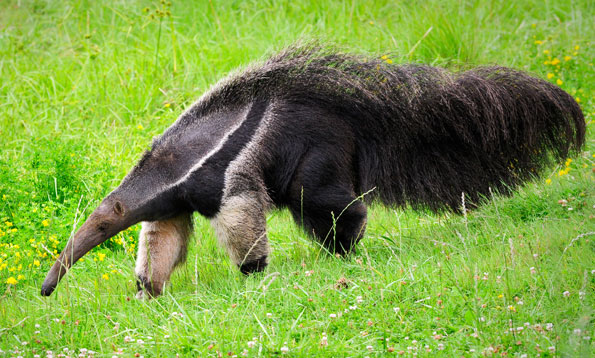
Cincinnati has one of the cutest, albeit weird, mascots I’ve ever seen: the bearcat. Yeah, I know. I didn’t think that it was a real thing either. Irvine, on the other hand, has a highly-identifiable and adorable mascot: the anteater. Peter the Anteater is supposedly 50 years old and minors in Myrmecology. Fun fact: An astronaut took a three inch tall plush toy version of Peter on the space shuttle Endeavor.
The word mascot has been traced back to a dialectal use in Provence and Gascony in France, where it was used to describe anything which brought luck to a household.
The word was first popularized in 1880, when French composer Edmond Audran wrote a popular comic operetta titled La Mascotte. However, it had been in use in France long before this, as French slang among gamblers, derived from the Occitan word masco, meaning "witch", and also mascoto, meaning "spell" (not to be confused with moscato, which is a type of wine).
But that’s not the fun part of this post. The fun part here is the mascots that we all love to question today. I have compiled a short list of awards for top mascots that I have arbitrarily decided. You’re welcome, internet.
Cutest mascot (tie): University of Cincinnati and UC Irvine
Cincinnati has one of the cutest, albeit weird, mascots I’ve ever seen: the bearcat. Yeah, I know. I didn’t think that it was a real thing either. Irvine, on the other hand, has a highly-identifiable and adorable mascot: the anteater. Peter the Anteater is supposedly 50 years old and minors in Myrmecology. Fun fact: An astronaut took a three inch tall plush toy version of Peter on the space shuttle Endeavor.
 |
| Hi! I'm a bearcat! |
Coolest live mascot award: Louisiana State University
I would like you to get to know Mike, the live Bengal tiger and school mascot. Mike I was originally named “Sheik,” and even years after coming to LSU in 1936 he would roar when his trainer would call the old name. To this day, rumors swirl that Mike II died mid-season during a losing streak and was secretly replaced.
 |
| Mike even has his own on-campus habitat! |
No, they don’t just walk around wearing funny dress jackets. The school mascot is Blaze. Blaze the dragon. It’s a dragon, guys.

Their mascot (since an Aggie isn’t easy to visually represent), is Reveille the dog. The first Reveille was a stray dog a few Corps of Cadets members hit with their car and smuggled home in 1931. The next morning at the bugle call, the dog started barking, revealing the newly-acquired (and illegal) pet and earning her the name Reveille. She would eventually be made a five-star Cadet General by the U.S. Army before dying and being given a military funeral.

Best historical basis for a mascot award: Manhattan College
The unique nickname of the Manhattan College athletic teams, the Jaspers, comes from one of the College's most memorable figures, Brother Jasper of Mary, FSC, who served at the College in the late 19th century. Fun fact: the college claims that Brother Jasper started the baseball tradition of the “seventh inning stretch”.
Chaucer the Chanticleer (SHON-ti-clear) is named after the author of The Canterbury Tales. As the university explains, in the “Nun’s Priest Tale,” the Chanticleer is a “proud and fierce rooster who dominates the barnyard.” According to the school website: “With all of his splendor and great looks, Chanticleer is also greatly feared and mightily respected by all.”

This rooster's got swag.
And finally.....
Silliest mascots award (tie): Evergreen State College and UC Santa Cruz
First, let me tell you what a geoduck is. The geoduck is among the world’s largest clams, weighing three pounds on average. It’s so large, it can’t fit into its own shell. Speedy the geoduck is one of just two non-insect invertebrate college mascots. The other is Sammy the UC Santa Cruz Banana Slug.


"Mom?"
Monday, December 29, 2014
Golfing on Father's Day
This is a story from my childhood as told to me by my father:
One year for Father's Day my dad wanted to go out and hit a bucket of balls. He wanted to try to get me interested in the sport, so he brought me along and left my baby brother at home with my mother. Since it was Father's Day, the place was full and there weren't many spots open, but we managed to find one. I sat on the nearby bench and watched while my father happily set up his golf ball on the tee.
I'm not sure how much any of you know about golf. I, frankly, know basically nothing about the game. This is something that hasn't changed since I was very small.
My father squinted down the fairway and set his feet. He looked down his club and took a slow practice swing. As soon as he finished with his follow-through, he heard me call out from the bench, "You missed it, Dad!" The father next to him snickered.
My father kindly took the next few seconds to explain that before you actually swing at the ball, you practice your swing to make sure you're doing what you want to be doing. My small self nodded sagely while my father stepped up to the green and took another practice swing.
"Missed it again, Dad!"
This time more than one nearby father attempted to hide their laughter while my father politely explained what was happening once again. Unfortunately, children don't really know the difference between an "inside" voice and an "outside" voice, nor do they typically understand why it might be unwise to simply blurt out everything they think so that an entire golfing range might hear them.
"Oh! I get it. Every time you miss the ball it's called a practice swing!"
By now, none of the dads could keep it together any more and they started guffawing so loud that my dad couldn't help but look around and shake his head. Thankfully, he didn't feel the need for any more practice swings, so he stepped right up to the tee and took his swing--only to have the ball go right into the grass about three feet in front of him.
Yup. Sometimes it just doesn't pay to take your daughter to the golfing range.
One year for Father's Day my dad wanted to go out and hit a bucket of balls. He wanted to try to get me interested in the sport, so he brought me along and left my baby brother at home with my mother. Since it was Father's Day, the place was full and there weren't many spots open, but we managed to find one. I sat on the nearby bench and watched while my father happily set up his golf ball on the tee.
I'm not sure how much any of you know about golf. I, frankly, know basically nothing about the game. This is something that hasn't changed since I was very small.
My father squinted down the fairway and set his feet. He looked down his club and took a slow practice swing. As soon as he finished with his follow-through, he heard me call out from the bench, "You missed it, Dad!" The father next to him snickered.
My father kindly took the next few seconds to explain that before you actually swing at the ball, you practice your swing to make sure you're doing what you want to be doing. My small self nodded sagely while my father stepped up to the green and took another practice swing.
"Missed it again, Dad!"
This time more than one nearby father attempted to hide their laughter while my father politely explained what was happening once again. Unfortunately, children don't really know the difference between an "inside" voice and an "outside" voice, nor do they typically understand why it might be unwise to simply blurt out everything they think so that an entire golfing range might hear them.
"Oh! I get it. Every time you miss the ball it's called a practice swing!"
By now, none of the dads could keep it together any more and they started guffawing so loud that my dad couldn't help but look around and shake his head. Thankfully, he didn't feel the need for any more practice swings, so he stepped right up to the tee and took his swing--only to have the ball go right into the grass about three feet in front of him.
Yup. Sometimes it just doesn't pay to take your daughter to the golfing range.
Monday, December 22, 2014
Softball Shenanigans
Here's another "did that really happen" moment from my life:
In elementary school, I played softball. Sports was one of the only ways that I got social interaction because, frankly, I was the "weird kid" that was always reading books in the corner. However, this is one of my favorite incredibly non-PC moments from my childhood.
I typically started each softball game as the pitcher. It wasn't that I was particularly GOOD so much as I was the best that they had for the time being. One of the other girls on the team actually eventually went on to play softball in college. Anyhow, after I played a few innings on the mound, I would inevitably get moved into the outfield for the rest of the game. It makes sense: you get to play the more interesting infield for half the game and everyone has to take their turn in the outfield looking for four leafed clovers and making daisy chain necklaces.
One of the issues that I had was that my coach would routinely play me in whatever outfield position happened to be facing the sun. It was awful. Not only could I not figure out where the ball was if it got hit to me, but I was squinting so hard some days that I started to get wrinkled brows before entering 6th grade. One day I mentioned this to my coach:
“Coach, why do you always put me in the outfield position facing the sun? I don’t like it.”
“Well, it’s easier for you to play that position than the other girls.”
“I don’t get it.”
“The other girls need to squint when they face the sun. You’re already naturally squinting.”
Unbeknownst to my younger self, my father (also the team's assistant coach) had overheard this conversation and was torn between abandoning the two or three girls he was working with to come to my defense or to let me handle things on my own. Fortunately, I made the decision easy for him.
"Oh, okay, coach. That makes sense."
To my 10-year-old self, this argument did make perfect sense. Growing up, I knew that I looked different from the other people around me. I knew that my Asian mother had squinty eyes and that my white father had big eyes and was as aware of it as I was aware that my father was very tall and my mother was very short (okay, not very short, but when you compare anyone to a 6'4" father, they are always going to seem "very short").
Yup. I actually said that. All I could think about as I sauntered over to my outfield position was, "Ha. I am genetically superior." I swear to God that's what I thought. Sometimes kids are just too smart for their own good. Clearly there were times that I was. You may now commence with the facepalm.
In elementary school, I played softball. Sports was one of the only ways that I got social interaction because, frankly, I was the "weird kid" that was always reading books in the corner. However, this is one of my favorite incredibly non-PC moments from my childhood.
I typically started each softball game as the pitcher. It wasn't that I was particularly GOOD so much as I was the best that they had for the time being. One of the other girls on the team actually eventually went on to play softball in college. Anyhow, after I played a few innings on the mound, I would inevitably get moved into the outfield for the rest of the game. It makes sense: you get to play the more interesting infield for half the game and everyone has to take their turn in the outfield looking for four leafed clovers and making daisy chain necklaces.
One of the issues that I had was that my coach would routinely play me in whatever outfield position happened to be facing the sun. It was awful. Not only could I not figure out where the ball was if it got hit to me, but I was squinting so hard some days that I started to get wrinkled brows before entering 6th grade. One day I mentioned this to my coach:
“Coach, why do you always put me in the outfield position facing the sun? I don’t like it.”
“Well, it’s easier for you to play that position than the other girls.”
“I don’t get it.”
“The other girls need to squint when they face the sun. You’re already naturally squinting.”
Unbeknownst to my younger self, my father (also the team's assistant coach) had overheard this conversation and was torn between abandoning the two or three girls he was working with to come to my defense or to let me handle things on my own. Fortunately, I made the decision easy for him.
"Oh, okay, coach. That makes sense."
To my 10-year-old self, this argument did make perfect sense. Growing up, I knew that I looked different from the other people around me. I knew that my Asian mother had squinty eyes and that my white father had big eyes and was as aware of it as I was aware that my father was very tall and my mother was very short (okay, not very short, but when you compare anyone to a 6'4" father, they are always going to seem "very short").
Yup. I actually said that. All I could think about as I sauntered over to my outfield position was, "Ha. I am genetically superior." I swear to God that's what I thought. Sometimes kids are just too smart for their own good. Clearly there were times that I was. You may now commence with the facepalm.
Subscribe to:
Posts (Atom)